Episode Transcript
[00:00:02] Speaker A: 1, 2, 3, 4.
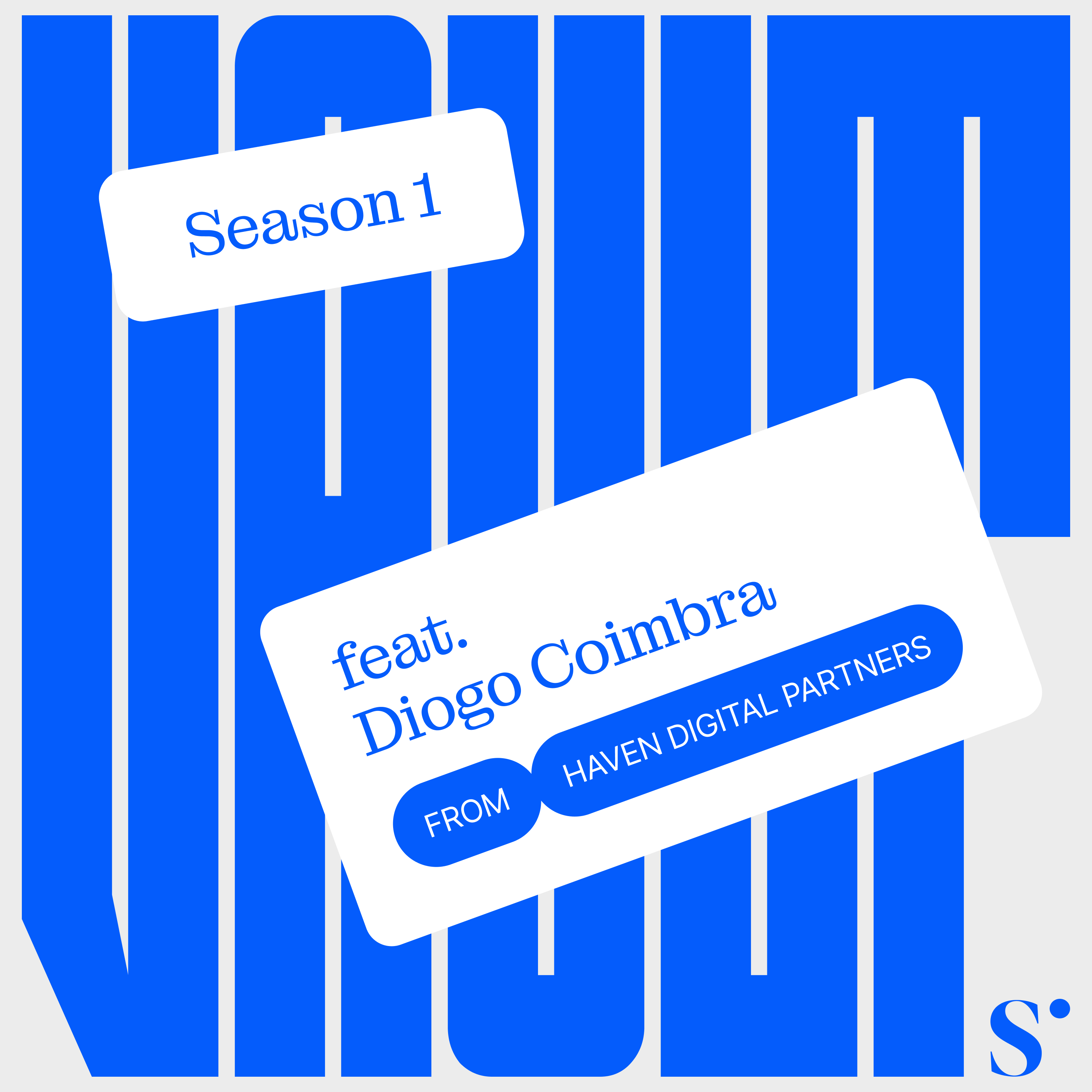
[00:00:09] Speaker B: Diogo. We know each other for two years, I guess more or less sounds right.
I think the first thing that we did or the first thing that we, when we met was going to a Benfica game.
[00:00:23] Speaker A: Was it Benfica or was it like.
[00:00:25] Speaker B: The battle match or maybe the Padel match?
The two things that I most love in life other than my family, Benfica and Padel. So it was a good time to meet.
What brought you to the blockchain world?
[00:00:43] Speaker A: The opportunity.
So the opportunity came and I took it, basically. So it all came through the relationship I had with. With David, with Simao, with David as well, and then with you. And then the opportunity came together. There was like a market opportunity that was like the network of people that we had, like, basically, like this group of people between me, you, the lightship guys, David.
Then we like, group together and say, and like, we figure out, yeah, there is a market here, there is an opportunity, and I'll be the leader of this project supported by Light Shift, Sub Visual, David Dash. And then everything started to roll out, like, organically. And, yeah, here we are.
[00:01:32] Speaker B: And when you say the opportunity, was it because you were excited about the project, in this case Avon? And maybe you could explain a little bit, what is Avon?
Or was the ecosystem in general and the opportunity in blockchain as a whole?
[00:01:47] Speaker A: Yeah, it's both, basically. Yeah, of course, the.
What basically drove my decision to, yeah, let's quit my career, my job, my very safe job, and like, actually the largest company, Portuguese company in the world. In Portugal. Largest company.
I was like, yeah, this is. This is like the project I want to build. This is something I want to build, I believe.
But what drove more, my decision was, yeah, this is the right people to partner with. So we have the right people, like the right network, the right skill sets, and then it's up to me to build it from scratch and kind of take advantage of this network. But, yeah, aligned with the blockchain primitives that, you know, I think it'll be, once properly adopted to the real world. I think it's going to be like a game changer. And just like a little background about Haven and how, I think how Haven can actually support the real world and how blockchain meets the real world. Haven is basically a company that supports ecosystems that are working called SDPINs, decentralized physical infrastructure networks. That basically is how blockchain actually. And I usually say, like, it's how blockchain meets the real world, because actually there are blockchain protocols that give, like a utility, right? So Give a service, give something.
So there is demand for that network besides, you know, storing value or doing transactions or settlements. It's basically like, yeah, you can actually buy the service beyond buying a token. Right?
[00:03:36] Speaker C: Yeah.
[00:03:37] Speaker A: So I even started with filecoin, which is basically like a data storage network. We are now integrating with Aether, which is a GPU computing power network for gaming, AI inferencing. I mean you'll see about AI now, but gaming for sure.
And the goal is going, is keep going, keep, keep adding networks, keep working with the founders, with the teams, doing a lot of business development, like bringing providers to these new networks. Yeah, we started with computing storage, but Depin is going to be much larger than that. It's going to be like. And it's already there, but the adoption is quite low in terms of energy, mobility, logistics. And as far as. Or as long as you need a provider to work on those chains and to commit decentralized infrastructure.
[00:04:30] Speaker C: Exactly.
[00:04:31] Speaker A: They will always need capital to lock as collateral for the networks to work healthier. So we are there for them.
So it's our demand. And then of course we have to meet supply. Right. Which are the token holders, which is.
[00:04:46] Speaker B: The focus of Haven, supporting that connection between the two players. In this case, you mentioned something that it was a big career shift and you mentioned like one of the largest companies in Portugal. So tell me a little bit about your background.
Where did you start and like that, that growth as, as in your professional life and how that led to you taking a co founder role or a founder role at Avon.
[00:05:19] Speaker A: Yeah, so I've always worked in finance. I hold a bachelor in management, master's in finance, both from NOVA in Lisbon.
Actually I've always worked in the finance environment. I started working at a private equity firm, launching banks from scratch, like totally GREENFIELD in Africa, like Guinea, Senegal, Mali, like this French colony or former colonies region.
And basically totally from scratch since applying for a banking license to the central bank, recruiting the teams, actually building the.
[00:05:59] Speaker B: Products.
[00:06:01] Speaker A: The network of agencies, totally from scratch. So I stayed there for three years.
I lost for example, a retail bank in guinea for the first two years. And in my third year I was basically like the chief of staff of the fund CEO. So I was basically having like a more broader vision on of all the banks, all the retail banks, institutional banks.
So that's where I gained like this, you know, this desire to launch companies specifically in the finance sector. Right. In the financial sector.
Then, then I, I was like, yeah, three years in Africa, this felt like 10 years, honestly.
So I wanted to have like other experience like in other geographies. So I joined Sky Hour as a finance director, which was like an amazing. I think was like so far until launching even was the best product I worked with, like in terms of like vision, goals and also the team.
Then I stayed there for one year and then ELF then, you know, because of like external.
Covid. Covid, yeah, because of COVID we had to like split ways and like everyone kind of like.
[00:07:12] Speaker C: Yeah.
[00:07:13] Speaker B: Went to the travel company in the early days of COVID was not easy.
[00:07:17] Speaker A: Yeah, basically like Sky Hour. Yeah, thanks for, for adding that. So basically Skyware was like a company that provided. Allowed you to buy minutes in the sky and then give those minutes.
[00:07:27] Speaker C: Yeah.
[00:07:27] Speaker A: Like to anyone. Basically, like you have a friend or you have a family member, you know, loves to travel. You want to offer like a trip.
But yeah, like, you cannot buy a tree.
[00:07:39] Speaker C: Right.
[00:07:39] Speaker A: Because you need to know destination when you want to do it. I mean, a lot of things.
So it's basically like a way to gift, to give their time.
So I stayed there for one year and elf then I quit to join edp, which is basically like one of the largest utility companies in the world. Like the largest Portuguese company by far.
I was working like, basically strategic planning. I was working to the board of directors doing the budget business plans of the entire group.
So I stayed there for three years and things were running very, very, very well. I had this career path, clear career path, let us say a lot of opportunities, like internally, like a very growing company going through renewables, new geographies from APEC to the US Basically covering all the geographies. But then I was approached by David Simao, like David Muguera, Simao from Lightchief, David from former pl.
And I was like, yeah, this is the right people. And of course, I knew David for a long time. He was the co founder of Sky Hour.
We went through like a lot of painful times and stressful times together. Like, there's like this bond that is created there.
And I felt like, yeah, this is the right people to partner with. This is like, this is something that I believe can be the future. Like. And now talking about blockchain.
[00:09:06] Speaker C: Yeah.
[00:09:09] Speaker A: But I felt that. I always felt that blockchain was like, yeah.
And don't get me wrong, it's like it's a world of engineers. Right. So you need.
So yeah, of course it started that way because like, of course it's tech. It's like software that you need to develop, but then you need like some kind of like Business mindset to. To not to take over, but to add value there.
[00:09:30] Speaker C: Exactly.
[00:09:30] Speaker A: And that's where I felt that I could add value. Right. So I had business, I had experience in watching financial companies.
I went through.
I've worked in startup environment, I've worked in like in a most corporate environment there is.
I've worked in, you know, launch. I've seen and I've done that, which is like creating companies in the financial sector. I was like, yeah, this is the perfect spot for me to. To grow like, like personally, but also like as. As a company.
[00:10:00] Speaker B: I think another reason was that you felt you missed the time that your aging process was going faster from the Africa days and you joined the industry where you can age more rapidly in the world, which is blockchain. Like one year, felt like 10.
So you are missing the days in Africa. That's really cool and smart from you. I want to go back to what you mentioned, that experience of building a new bank in Africa. I think we can tie up a lot of things from that process to what is to create a new company in a new industry with a lot of unknowns, a lot of regulatory things that we are still trying to define and wrap our minds around it.
How was that experience of starting a bank in a place that probably we don't have the same structures that we have in Europe?
What were the main pains that you felt there?
And can you plug that into some of the things that you felt now, starting even in the blockchain space?
[00:11:06] Speaker A: Yeah. Interesting.
So basically when I was in Africa, the struggle was how can you cope with and collaborate with local teams? Because our goal was to launch the bank, but part of that was basically to recruit the local team because you always need to have the local. The C level has to be local, of course, like the middle management and like low management and agents, they all need to be local.
So it was kind of like a different kind of challenges because my goal there was make sure that the bank was established with the standards that we wanted. So basically the goal of the fund was let's build banks in Africa with European standards. Right.
With the local teams. So that's the challenge there. Right. Because you want to have European standards in a, like in an African market managed by local teams, which should be.
[00:12:08] Speaker B: Difficult to find that talent.
[00:12:10] Speaker A: Yeah.
[00:12:10] Speaker B: And with the same level of education and experience that you find in other places.
[00:12:15] Speaker A: Yeah. And like, for me, I was like 25, like 24, and I was like not coaching, not mentoring, not training. Kind of like the mix of these three, like C level guys, like with, you know, 40, 50 years old, with, you know, a lot pre CEOs of other banks. And I was like, yeah, I mean the group wants to, wants to go this way or would prefer to go this way over this one. So these are the standards we want to apply. So I was the on site guy of the fund to make sure that that could happen, which was very challenging because I mean, as I said, I was like off their age sometimes. I was dealing with sea level. I was, I just, I, I left like university, like I don't know, six months before that. I was like, what does these guys know?
Like sometimes I was like, yeah, this guy must think that, you know, I'm like, you have no experience. You have never done this. Like you're teaching me. I was like, so it kind of allowed me to develop some skills of managing people and expectations and you know, stay calm and you know, be patient.
And you know, I think that was the thing that I brought like more into Haven, which is like, yeah, listen to first, Listen, think, process and then act over that. I think that's my biggest learning and.
[00:13:35] Speaker B: I've experienced that with you. I think you are a very rational and pragmatic founder that doesn't rush into situations. You like to hear, process information and then make informed decisions. And I'll really respect that in the time that we have been working together. I think I can notice that in you. So it definitely stayed and it's cool to see where you train that specific.
[00:14:03] Speaker A: Skill in the middle of Africa. Otherwise I wouldn't be here if I rushed myself into things and wouldn't stay. Okay, let's process this information. Let's see what's the next step. Yeah, and yeah, and there was you know like an European 25 year old guy in the middle of Africa, like with a suit and a tie.
I was like, who is this guy? Like this guy is strange here. So there was like a lot of, you know, stressful times and you know, situations that I, I had to handle myself. Like, because I was there like alone basically because I was the only guy there. I was like the representative of the fund there. So I was like, I had basically like to grow by experience. Basically.
[00:14:46] Speaker C: Yeah.
[00:14:47] Speaker A: Like soft skills. Right? So because hard skills, like it's not, it's not like a difficult thing to build like a bank. Like, like actually that bank was more like a retail bank basically, like providing deposits and credit to SMEs basically. So it's not that hard. It's not like a, you know, rocket Science. It's not rocket science at all.
But yeah, the challenge was more, you know, to make sure that the execution was there.
[00:15:15] Speaker B: People respect the rails and stuff like that. Yeah, makes a lot of sense. It's really interesting.
Fast forward to nowadays with Avon. I feel that it can be almost perceived as the opposite aspect in the sense that you have a lot of talent around you, a lot of smart people building. But you mentioned that there is a need for people that can translate that to business, to user needs, etc.
Tell me a little bit more about how Avon became his own path of existing, collaborating, building relationships.
Where did you felt a lot of challenges and what did you do to surpass those challenges?
[00:16:05] Speaker A: Yeah, I think I can give a very interesting example about the first part of your comment question.
So at the beginning, our goal was to partner with Anchorage as our qualified custodian because Haven is a solution for institutional token holders. And institutional token holders, actually, they need to have qualified custody.
And at the moment, at the beginning, Jogmonica was one of the first conversations I had about Haven because we wanted Anchorage to support and to provide the custody.
And it was very difficult to get to get their partnership, actually.
And of course we had like a fallback plan, like with another custodian, which were like three times cheaper in terms of like custody fees that we pay ourselves, even like pays the custody fees. And we're like, yeah, so we have Anchorage that will charge like three times more than the other custodian.
And we still made a decision that, yeah, we want to go with Anchorage. And we actually had to overcome a lot of challenges along the way.
I had to talk, like, with, I don't know, dozens of people from Anchorage, like from sales team to the engineering to operations to trading. I had to talk to a lot of people so that I could go back to Diogo that like, since day one, it was like, yeah, let's partner.
I want to support Haven.
But there were like challenges that there.
But once we figured that out, I basically had two options between Anchorage and the other custodian, which is like three times cheaper. And the decision was, yeah, let's stick with Anchorage because Anchorage is basically a way for us to answer this market need of holders, which is qualified custody. And although it's three times more expensive, it basically would allow us to grow as far as we.
As we did so far, which basically.
[00:18:13] Speaker B: The brand value of Anchorage was more important and could have more value to Avon than the competitor that was three times cheaper.
[00:18:25] Speaker A: Yeah, we'll never know if we would come this far in terms of aum, how much field we have deployed through Anchorage, if we would have partnered with the other custodian, I mean, we'll never know. But the decision at that time was exactly that. So what's the benefit of going with Anchorage? What's the cost versus the other competitor?
And it was clear that. And actually because the goal is that.
So Falcon is just the beginning. It was just like the first one. We wanted to partner with a custodian that can actually support our vision long term. Right?
[00:19:02] Speaker C: Yeah.
[00:19:03] Speaker A: And actually it's exactly what's happening. So now we are adding our second network and we approach the founders of that network, which is aether saying that, yeah, Haven is working with Anchorage. And first reaction is like, oh, wow, congrats.
So as you said, it's brand recognition. They have a very good reputation and they have reasons for that.
And so basically now we have a sales pitch to these emerging depends on.
[00:19:29] Speaker C: Right.
[00:19:29] Speaker A: Which is we can put you in contact with Anchorage. Anchorage can support your new token, which is something that they see that's very valuable because all the institutional clients use Anchorage. So it's basically like a way or to increase the likelihood for institutional holders to buy their token. So they're like, that's good for Anchorage. It's a very good business because we are basically bringing new depins, new aum, like new liquidity, new foundations to their custody platform. And for us, of course, it's great because we are able to have a commitment from these foundations because they are the first large holders. Right. Because it's very common that institutional investors, they have to go through a cliff period, where basically no one actually owns the token.
But the networks, they need the token to be locked.
[00:20:23] Speaker C: Yeah.
[00:20:24] Speaker A: So it's the foundation that has that job. Right. So the foundation, either like the founding member, like whoever is that, but belongs to this group of founders. Right. Either the foundation or, you know, the.
The founders themselves.
So we basically ask them to commit a certain amount of capital to stake through Avon through Anchorage. So basically it's like a triple win scenario, right?
[00:20:46] Speaker C: Yeah.
[00:20:46] Speaker A: For the network because of course they get.
Basically they start to develop their network effect, which is something that the pins really need. It's like working on their supply network effect at the same time that they need to build product market fit. Right. So we take care of the forest, they can take care of the second.
[00:21:07] Speaker C: Yeah.
[00:21:08] Speaker B: That's amazing.
[00:21:09] Speaker C: Yeah.
[00:21:09] Speaker B: And it's nice to see that a bet that we did in the early days also is paying forward by the growth of the Brand of Anchorage, which was already big at the time. But also if we Fast forward to 2025, the world of crypto and blockchain changed a lot in the last weeks with the new president in the US Anchorage being at the center of all of that change with a lot of proximity to the administration itself and the regulatory bodies in the US and it's amazing to see that it was also a bet that Avon did that can piggyback on that growth and build with other networks and continue developing that relationship. And I think it was not that obvious at the time and really required some foresight, some perspective on the future from you to continue doubling down on Anchorage. Even that you had a cheaper version or option and potentially an easier one to integrate with because they were more needy than Anchorage. Anchorage was already a big business that had a lot of things going on.
But you stick to your guns and continue focus on closing that deal, which is paying a lot right now. On the expansion of Avon, what is Avon right now in terms of size? Tell me a little bit about how the business is going.
Some big numbers that I know that you have there to share and double down on.
How these big numbers can also translate into new growth and the new players that you can partner with. And is it only through this business or can also even scale horizontally and go to other verticals and do other type of businesses other than just supporting. Depends on this connection between service providers and stuff like that.
[00:23:22] Speaker A: Yeah, very interesting question.
Actually two questions. So on the first one, on where we are right now.
So we started basically doing business in early late April 24th. So nine months have passed and we have achieved almost like 5.3 million fill deployed to storage providers.
Basically now we have like 5% of the network of the Filecoin network in terms of like power. Like data that is in the network is being supported by tokens that Haven have breached.
And eight, nine months alone. And of course like at the beginning was like we're slower than now. Right. Slower than it is right now.
And it's actually like 30% more than what Anchorage. Because Anchorage used through this product. That's why we wanted to partner with them because they also had the custody like the technology already built.
And basically at the top Anchorage was like I think 4, 4.5 million fill during a bull market.
[00:24:34] Speaker C: Yeah.
[00:24:35] Speaker A: So now we are like at a very like we're experiencing like the lowest filecoin price so far.
[00:24:40] Speaker C: Yep.
[00:24:41] Speaker A: And still yet we. We were able to. To outreach what have what Anchorage did it like from our closest competitor. They took like two and a half years to reach what we reached in like nine months.
[00:24:55] Speaker C: Yeah.
[00:24:56] Speaker A: So basically like, it's like, okay, so this to prove that, okay, we did this for filecoin. We're also doubling down our efforts on filecoin because we are. Because. So filecoin is like a data storage network where you basically where the storage providers, they meet clients that want their data to be stored and they meet in this like marketplace that's called filecoin.
And we, we are investing in actually also doing this bridge. So because we bridge token holders with providers. But there's another bridge that needs to actually the most important one, which is between the providers and the end clients, like the companies and individuals that want to store their data instead of going to AWS or instead of going or building their own premises, we want to double down in that as well. And we are working on that. Our head of business operations is working constantly in basically driving demand for us, which is providers needing the token. But they just need the token if they have data to store.
[00:26:05] Speaker C: Exactly.
[00:26:06] Speaker A: So it's good for us because we can basically control as well our demand.
And it's a way for us to, to present our holders the best deals that are in the market, which is.
[00:26:20] Speaker B: There is a lot of trust that needs to happen there. Being a decentralized storage service, you need to really trust the service provider and the client with the data.
All of that needs to happen in a trustworthy relationship. Is that secured by contracts alone?
What are the penalties and how do you double down on? How do you through Haven are trying to get more people to store their data in filecoin in this case instead of going to aws. Because I think that's super interesting.
[00:26:58] Speaker A: Yeah, I mean there are a lot of. Actually we are doing this because we need to generate our own demand.
It's not our job. A lot of people are building in that sense. For example, Kave, Safira are like a lot of Filecoin L2s, exactly like actual marketplaces that the providers and the clients, they actually meet on chain.
And we want to partner with those L2s to actually give the token or delegate the token.
But yeah, the relationship between the clients and the providers are secured by SLAs. Right. So you need to have an agreement. The client needs to may or may not like this. Of course it depends on the client and on kind of like what kind of requirements or kind of data they require. And a lot of these SLAs can be actually done on chain. Actually it's what the Altos are building.
But yeah, I mean we want to support as much as we can in terms of like know more like in a customizable way and you know, manual approach doing these connections between the clients and the providers.
But it's something that we, I mean it's not our focus. Right. So our focus is, you know, to basically. Because I think the problem with filecoin sometimes is that few, like there is one or two agents that are doing a lot of stuff and if you focus and if you specialize in reducing one specific friction, I think the entire ecosystem will behave better. And for us, our friction, like the friction that we're solving, the problem that we're solving is on one end providers needing the token to pledge as collateral and from a supply side getting yield over their stacks.
[00:28:56] Speaker B: And going to the second part of my previous question on do you see Haven scaling horizontally in this deep in space and how could that happen? Or is it too soon to look into that or too soon to reveal?
[00:29:10] Speaker A: No, no, no. Yeah, we are. No, I mean we're very public about it. I mean we have started working with a tier which is basically like the logic is the same, right? So you have providers, you have real clients. The providers need to stake the native token because they are securing the blockchain and the clients need to have some kind of security that these guys will behave correctly. That's why the network asks them to stake the token. And of course they come to Haven to get basically to have access to the capital to the token.
And yeah, this is our second network and we want to like, we want to expand to like and support actually like what we understood is that our value because we were not late, but we were like, we started working with falco in like 24.
Mainnet went live in like October 2020, like almost like four years, three and a half years after like Mainnet. And what I figured is if we were here like three years before one, of course we could have earned much more because this depends because of the supply networking effect. They need to subsidize basically the providers and we could actually bring more value. We could have provided feedback that we are providing now to the PL team, to developers, to all the teams building on filecoin.
We are actually sharing our knowledge. Actually I had so many calls with providers and people from pl. They see the model that we built.
It's a model that basically mirrors what's happening on chain in terms of. So basically our model is able to forecast everything that will happen on the network, you put two inputs and then you forecast the entire network for the next 10 years, 15 years. It's very good because you can actually predict rewards. Slashing fees. Yeah, Pledge requirements. And actually that was like the step zero. So we started by actually understanding how the network actually behaved and how it's built and then build a product and a service that with these parameters how can we build the best product for the supply and the demand side. So but basically having this, the knowledge that we have on the protocols, we can actually add value there and we can suggest changes or why do you guys did it this way versus the other. And actually sometimes to actually understand why they build it that way. So then we can actually explain the holders and the providers. Actually, for example, we have one of the largest funds in web 3. They are delegating their Filecoin tokens through Haven and we have like a monthly call. Actually like at the beginning it took like eight months to onboard them because there were like a lot of questions.
Although they used Anchorage service before for filecoin staking. But they were like, yeah, this is Anchorage. Like I'll just do like whatever they say. But yeah, there's like Haven, this new. I trust Haven because you work with Anchorage. I'm open to work with you. But I have like so many questions. Like help me figuring out this because although they are like a large fund, they are a filecoin holder.
One of the earliest CEFT investors.
I was actually not teaching, but covering a lot of aspects that they had no idea about the network, about the network, how it behaved.
Actually we have a monthly recurring call when we talk about developments, how the network actually works.
That's our job.
It's to work alongside providers and holders to make sure that they eventually met.
[00:32:59] Speaker B: I wanted to pinpoint something that you mentioned because I think it's really fundamental that more people focus on that in this space, which is you first built a model, you look specifically into the needs and the pains that these stakeholders were feeling and you translated that into what could be represented in a business here and in a product and then you when to sell that before you started building technology.
And I'd say that pretty rare in this ecosystem. Normally people fall in love by a challenge and a technical issue. They build it and then they try to figure out if someone is going to use it or is ready to pay for it.
And I wanted to flag that, which I think was super important here at Haven. And I think it's important that we translate that for other founders that are starting or thinking to build something, go deep on the problem, on the needs, on speaking with different stakeholders and then start thinking what the product could look like that solves that.
And you mentioned another thing that is you had these huge stakeholders, important VCs in the industry.
Sometimes they do investment and they go with an inch on something. They believe in something and they invest in it. But even them don't know how things work on a lower level on the small details. And you were there coaching them, teaching them or wherever and I think that's totally normal. I don't think there is nothing wrong on their side or on you teaching them. But educating the stakeholders also an important aspect. So well done and congrats on that.
With all of that experience.
Could you give me your grand vision for the Deepin space?
And if you could also, I think you are going to touch there. But all your days, edp, like an electrical company can also inform you on that vision and all that plays a role like your background, working there for a grand vision for Deepin.
[00:35:23] Speaker A: Yeah. So as I said for me, Deepin, I mean of course I have a biased vision here but for me it's like where Deepin actually meets the real world.
When I say real world is beyond what we usually do as payments, storing value, which are like basically the use cases of Web3. I don't like to say that speculation is a use case. So I just stick to storing value and transactions more like financial products. But if we look at the world beyond finance, it's basically like depends, right?
And anything that happens in the world that needs infrastructure, either if it's more like on the hardware, software side or even if it's like a service. For example, I'm sure that there's going to be an uber, like a web3uber kind of thing for mobility and for example energy. As you're saying, a project like Glow, for example, they're basically building decentralized solar farms all over the world.
And of course using the traditional grid, you cannot like go.
I mean you cannot take that on that because the grid is the grid but you can actually connect to the grid. And that's what they're doing in a very decentralized way and then create a marketplace where you can actually buy and sell, you know, carbon credits. You can actually, you basically buy your solar panels and then of course you pledge it to the grid, to the actual grid.
But they are on chain, right? And once they are on chain, you can actually buy and sell energy on chain.
And that's a very interesting project. That's definitely a very interesting use case that as you said, eventually we'll start working with those.
But yeah, we need to. And talking about the challenge that you asked about, the challenge that we faced in the beginning and the challenges we face now, and the challenge that we face now is I think it's what most founders face initially and we're facing now, which is gathering the right operational team to grow the business. Because we were able to grow a lot in these first eight, nine months with a very small structure, very small. We were basically, it's me and Kevin doing business and then we work with Subvisual on the engineering part, which has been great plug, it's like a kicker, which has been like a very good experience. And everything that Haven achieves is because we have these very good people working in sub visual and believing in Haven and everything as you know it very well.
But yeah, I mean, at the end of the day it was like just two guys working.
Of course we outsource KYC compliance to an independent company for independence reasons, but also for cost. It's not our job to do KYC and AML things.
We rely on a third party. We do due diligence ourselves.
But in order to expand, we need more people.
And our goal is to do one new network a month, have one new network a month instead of one every nine months.
But the thing is that our business is not like for example, an exchange or a custodian that in order to support a new token, you invest like, I don't know, three, four weeks, one month, two months to integrate with the network and then it's done.
We actually need the same time to understand, to research, to look at the players, to look at the stakeholders, basically. Like what we did with filecoin. Like this model that you talked about.
[00:39:14] Speaker B: Yeah, it's really build the economic model to support the growth within that ecosystem. And you need to go ecosystem by ecosystem.
[00:39:23] Speaker A: Exactly. And then once that's done, you're basically making no money. Right? Because, okay, you understood what, what's going on, but now you need to do business development on it. You need to do agreements with the providers, you need to go to the events to meet them to do KYC AML due diligence. So you actually have to.
Basically that's where your work starts. Right, because before was, okay, you were researching.
You need like a research team to do that, but you also need like a product team to take on the conclusions of the research team, build a product, but then you also need like an engineering team to implement what the product team is.
[00:40:01] Speaker B: And that product team needs to also do on the technical level and on the technology itself. You need to do kind of a due diligence of what you are doing. How that could work. Is the network and that ecosystem specifically that you are looking into good enough.
[00:40:21] Speaker A: For us to support?
[00:40:22] Speaker B: So I think that engineering side is also very fundamental as you scale. Because in the beginning it will be more or less obvious bets because there are a few players in the market that you understand that they are good, they are growing.
Filecoin was an obvious one, but when you start doing this one by month, you'll get to a stage where that due diligence becomes even more relevant.
[00:40:46] Speaker A: Yeah, obviously that's why basically Ava needs to build. And that's the current challenge that we are in is actually okay. Now we build a service, we prove that we can actually do this. We have done with filecoin successfully. We are doing the second one. We just wanted to leverage and to do it faster. Right. And because we know we have, as you said, like a very good relationship with Anchorage, a very good partnership going on, we have like the largest Web three funds using Haven as a client. We have the relationship with the providers.
So now we need to leverage these. And how can we grow faster knowing that we also have like the investor management license. So we have the right structure and setup in place and the right relationships to basically to say that, yeah, let's just stick with filecoin, we're doing great, we're profitable. But no, our structure allows us to think bigger and to think more in the future.
[00:41:46] Speaker B: I want to flag another insight which I think it's fundamental and this will sound like a praise for the yoga and a praise for the visual at the same time, which is fine. It's just a visual podcast.
So the fact that you are very pragmatic in the beginning and you focus on what is core to Haven, which is building these relationships, building the business development.
And you could build Haven alongside Sub Visual, which you trusted to do the product side very well, which is super relevant, but without the other part that you are focused on, would mean nothing. Like the product of Haven doesn't mean anything if there is no business happening. I think that's another aspect that we get lost. A lot of times when you are creating a new company, new venture, it's very easy for founders, either because they are technical or not to fall in love with the solution.
And they start building stuff without understanding how they can make a business out of it and I have seen this a lot with second, third time founders and publicly I mentioned this a few times. It's easier for SetVisual to work with people that have created companies before because they understand that their focus should be on the core things of the company which most of the time is related with business or growth and not as much on the product side.
This is not true for 100% of the cases, but most of the times it is true. And the fact that you could in the beginning focus on let's build a business out of this and I can trust a partner to build the technical side. I think it's another aspect that I really want to flag here and commend you for doing it because I think it was also another aspect that contributed to allowing aiven to have this growth in such a short time. Because you had people to trust on the product side, you could focus on the business and it could grow that business to an amazing more than 5 million Filecoin in just eight to nine months. I think that's amazing.
And of course now the still day zero in terms of building a team and growing that team. But it's a process that you can continue building on.
[00:44:12] Speaker A: Yeah, you said, I think was, I say this a lot and which is like one is bigger than zero, right?
[00:44:19] Speaker C: Yeah.
[00:44:20] Speaker A: So and at the like in the beginning, even when we started working with Visual, so I, I knew what kind of product we needed to build in terms of engineering, like actually like what kind of output we need. I had no idea what we needed to get there.
[00:44:36] Speaker C: Exactly.
[00:44:37] Speaker A: So the decision was, okay, let's start, let's like, let's buy actually some fill and let's talk to a provider, let's you know, delegate, you know, assume all the risk. Saying that yeah, if we lose, it was like 20k dollars, I think like 3000 fields at that time.
And I was like, yeah, if we lose this, I don't care. Yeah, I don't care. Like we need to learn, we need to start. Right. So one is bigger than zero. Well, yeah, so we bought some and actually we're doing exactly the same thing with ethr. So we just actually yesterday we just bought like, you know, like a couple thousand of eth.
We have integrated like with a provider. We are, you know, testing the network because with filecoin it was easier because we had benchmark, we had competitors, we had like market behavior that we can absorb and you know, work through that with new depins. You are actually setting up your, you are setting the rules basically. So you need to do a lot of research, testing, but this to say that like the most important thing that I think as like a decision for Avon in the beginning was, yeah, let's start before we actually start building, you know, this fancy software, fancy tech stacks, let's build what we need. Actually, I think when we started, if we look back, I think probably we have like we built for example, like 5 or 10% of what we have now in terms of like software and.
[00:46:07] Speaker B: Product, which is what people normally called the mvp. But they get lost on building a minimum viable product that is not doing anything in real life, just a mock up of what the product could look like. And in your case, you built a need, you build the function of the product itself, you put it to use through that mvp and you could have those stakeholders giving you honest feedback and proper feedback to continue building on the product, which is the right way to do it.
[00:46:39] Speaker A: Yeah, like you open the feedback loop as soon as you can.
[00:46:42] Speaker C: Exactly.
[00:46:42] Speaker A: I think that was very important. There was also like, to be fair, also very important that we had our first client before even started, which was Lightshift. You know, the incubators of Haven, they were, and they still are like one of the largest filecoin holders.
[00:46:56] Speaker C: Yeah.
[00:46:57] Speaker A: And we were able to test a lot of things with them because yeah, they are our investors incubators.
But in terms of like the product and you know, working with their, with their filecoin, I was like, yeah, let's assume that these guys are completely out of, you know, the incubator investor relationship. And let's assume that these guys are completely just filecoin clients. Right.
And with that we were able to get a lot of feedback and work on the product. And then once we started doing with others, we were like, okay, this is. And of course we were absorbing a lot of experience about the network. So what we actually where to focus.
And even now we are still automating a lot. Basically like where we are right now is automating processes.
Because the core is built, we are just like here and there we are adding some small features.
But what we are doing now that's more important is automatizing processes. Because it was very painful in the beginning because just like to have like, like to give a small kind of like briefing about how we do things is so we negotiate the terms with the providers, so we talk to them after onboarding, like kyc, aml, due diligence. Then we build a report, sort of like an equity research report that investment banks do for companies. We do that for the providers. So we show who they are, their team, where their data centers are, their experience, like past experience with filecoin, past experience with Haven.
What projects, data projects they are onboarding, like who is the end client. And we build that report and then we send to the, to the filecoin holders and each one, they will get their individual report. So we show them how your portfolio looks like and how your portfolio will look like after the deal.
That requires a lot of work because you will need to constantly being forecasting the network. Like each deal that you do, you're saying, okay, this is your portfolio. This is how much you're expecting from these deals. But these deals are always changing because the network is changing every 30 seconds actually.
So you need to be updating a lot of deals, like past deals, new deals.
But in the beginning I was like, yeah, I will do this by hand, like Excel files, like connecting files, updating, getting data, copying paste data from the explorers. It was very painful. But yeah, we have to do things that don't scale. At the beginning, definitely. That was basically the kicker of this saying, which is like, yeah, at the beginning, because I'm saying this because you said before building a business, you need to build basically you need to create demand for what you're building. You need to give clients what they want. Yeah, and that, that comes way, I think, well, from my experience, that comes way before having a business. Because you build a business after you understand what the client wants.
[00:50:10] Speaker C: Exactly.
[00:50:11] Speaker A: And, and for that you need to do a lot of unscalable things. Things very inefficient, very painful.
But yeah, and then, because if you start there, you can actually understand. Yeah, this is so painful that I need to automatize this instead of, yeah, let's build everything first and then, you know, then start selling, start, you know, a business.
[00:50:37] Speaker B: What would you say to a Diogo that is working on another large corporation in Portugal? Could be EDP or any other.
What would you say to him if you wanted to convince him to move out of that and create a new business in blockchain?
Stay in your job, come work in.
[00:51:06] Speaker A: Ivan.
[00:51:09] Speaker B: If you wanted to motivate them to be a founder in this space?
What do you think we should tell those people that probably are very comfortable in their jobs having really good salaries, but are missing on opportunities like Avond?
[00:51:27] Speaker A: I think it's the other way around, actually. I think like, I mean, you know this very well, but like one thing is working, you know, inside a corporation. You are, I mean, of course you share the Vision, you work well, you have your career path, you have your middle management, senior management, you are working in a structure, but creating things from scratch, and especially creating a business in such a competitive world, I think it needs to come or this desire needs to be natural to become a founder. Because becoming a founder is not the same as working or building a new department in a company. For. For example.
Because the challenges are much larger. Because at the end of the day, of course, getting some co founders may help.
Having people to share the pain, that would be one thing that I would just suggest.
But I think it needs to come organically. I think that it's a very specific mindset, I would say.
[00:52:38] Speaker C: Yep.
[00:52:42] Speaker B: I would also add that if they are curious about the space, they should test it, they should play with it and look for the pains. Like you did when you first started looking to Haven. Try to look from your experience. Where do you see the inefficiencies? Where do you see people complaining? Where do you see your own or what is your own perspective on using the tools? Where do you feel the pain and go inside yourself and through your experience and try to find. Where do you think that you could solve something and then finding the right people to do it with. Because you already mentioned that a few times. And I think it's another thing that was super important in Haven. Like getting the initial set of people that would support the business.
Integration of the business was also super important.
[00:53:39] Speaker A: Yeah, no, definitely. And one thing about that, actually, that's a very. I think it's a crucial thing to do because of course I didn't jump like into building Haven, like, yeah, let's quit my job. And because I was very. I mean, I loved my previous job, so. But what made me changing like creating Haven was of course the network, but it was also because.
And this is like, you know, this is very specific. But the light shift guys, they were considering, you know, getting into filecoin.
[00:54:06] Speaker C: Yeah.
[00:54:07] Speaker A: And they were actually analyzing a provider. Like, they were actually looking into investing into a storage provider, like a filecoin storage provider.
And they knew that I wanted to be like, to. I was like studying filecoin. I was like getting comfortable with the. Everything around the ecosystem. And they asked, like, Yoko, can you help us doing due diligence on these guys, like, understanding their business? And yeah, sure. So I was on the calls, I was doing basically taking some advisory role and I was the one revising their model, their Excel. And I was like, what line is this? It was like filecoin borrowing from Lender but this line is huge. Yeah, there's a huge business here. And then I started asking questions more. More for myself than for the due diligence.
But basically like to your point, before jumping into this and creating a company, leaving your previous job, try to gather as much information as possible, like to, you know, to exchange to have conversations with the people that are actually doing the business, doing their, you know, basically get stakeholder feedback as soon as as you can.
[00:55:19] Speaker C: Yeah.
[00:55:20] Speaker A: So that you then you can actually make the decision. Yeah, I want to invest my time and my energy, my 247 energy on this. There is a business here, there is the people and yeah, I think I would.
I think I wouldn't do anything different from the early days. I mean they're still very early days but like the earliest first days but. But I think this research was very important and the network was very important as well, basically to make the decision. Yeah, I want to awesome to start this.
[00:55:53] Speaker B: Do you think it was the game from befica game that we lost?
[00:55:58] Speaker A: So we lost against inter quarter final champions. Quarter final.
[00:56:05] Speaker B: Yeah, it was not that great.